Monday, November 30, 2020

Amazing Couch is getting a facelift (or re-upholster!)

I'm moving my blogs to Squarespace.  Stay tuned!

With the move to Squarespace, I'm also going to optimize the photos (as I learn more about photography and sharing photos on the web!).

Hope you continue to travel along with me!

-Deb

Monday, June 11, 2018

The Anglican, ENGLAND

Cathedral Church of Christ (informally, The Anglican). An enormous specimen of Gothic revival architecture, and the second largest Anglican Cathedral in Europe, its tower stands more than 300ft high (a football field standing upright) and holds the heaviest peal of bells in the country (13 bells weighing a total of 16.5 tons—the same as six Clydesdales).

The imposing, stark structure of the Anglican’s exterior continues inside. The cathedral is cavernous with vast open space, colossal arches, and little adornment. From the high ceilings to the wide open spaces, the cathedral amplifies every breath, whisper, and clicking of shoes.


Bath Abbey, Bath ENGLAND

Built on the site of a Saxon church where the very first king of England (King Edgar) was crowned, this great medieval church was constructed more than 500 years ago. Its nickname is the “Lantern of the West,” thanks to its stained glass


The interior contains a fine fan vaulted ceiling, and 52 windows cover 80% of the wall space, creating a light and airy feeling.


The stunning ceiling.

The baptismal font and one of the exquisite lighting fixtures.

Friday, September 29, 2017

Villefranche, FRANCE

Villefranche, a small town with steep narrow walkways broken up by small squares is the most visited cruise ship port of call in France. The bay is one of the deepest natural harbors of any port in the Mediterranean Sea, providing safe anchorage for large ships.


The Chapelle Saint-Pierre dates from the 16th century. Used as a storeroom for local fishermen's nets, it was restored in 1957 with Jean Cocteau adding his now-famous murals depicting the life of the saint and of local fishermen.


Église Saint-Michel, in the heart of Villefranche,  was built in the 1750s in the baroque Italian-style.


Fort Saint Elme


The dogs of Villefranche


Friday, September 22, 2017

Bodium Castle, ENGLAND

This 14th century moated castle has massive outer defensive walls and a network of inner courtyards. The castle appeared in Monty Python and the Holy Grail, renamed "Swamp Castle," in the "Tale of Sir Lancelot" sequence.


Wednesday, August 16, 2017

Street Dogs of Pompeii, ITALY

The dog represented in the Cave Canem mosaic, in the House of the Tragic Poet, is the most famous evidence that dogs were part of daily life in Pompeii.  The (C)Ave Canem project cares for the many dogs now living among the ruins.  Dogs are vaccinated, registered, and available for adoption.  Each dog is given a name inspired by the particular area of the site the dog lives in, often references to ancient owners and historical houses.


According to the adoption website, this is Octavius.


This woofer was one I might have photographed the last time I was in Pompeii, in 2008.  We ran across him several times as we toured the ruins.


This Shepherd mix, listed on the Pompeii adoption website as Europa, lounges with paws crossed near the exit of the site.


This young pup insisted on a close-up, running up to the camera and grinning into the lens every time I crouched for a photo opp.


Sunday, August 6, 2017

Pompeii, ITALY

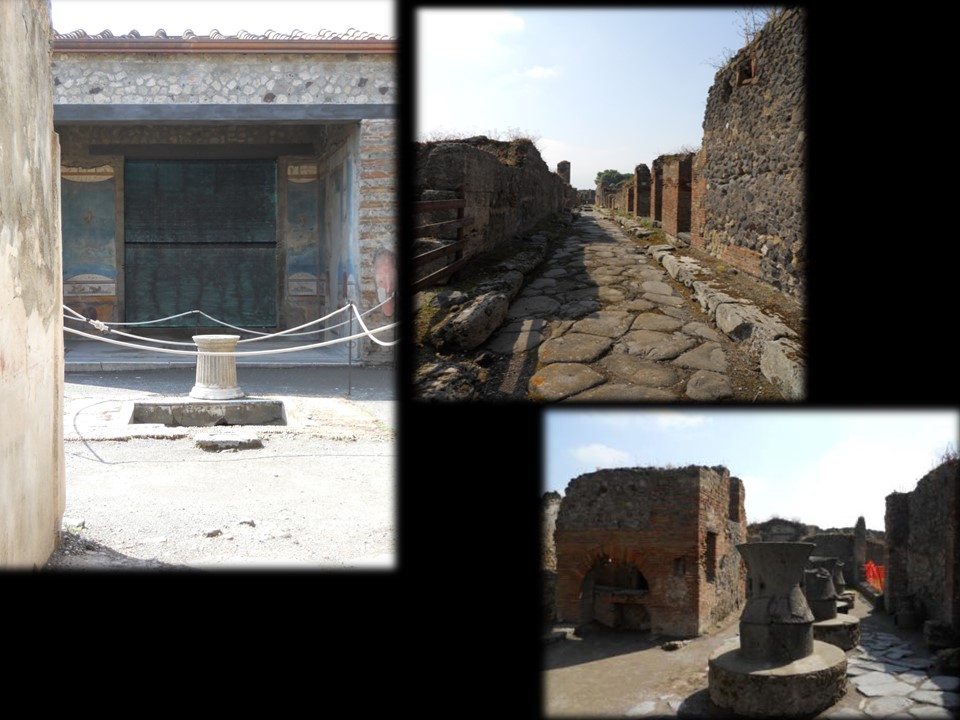
Pompeii was destroyed during the catastrophic eruption of Mount Vesuvius during its two-day eruption in AD 79. The volcano buried Pompeii under 60 feet of ash and pumice, and it was lost for nearly 1,700 years before its accidental rediscovery in 1748. Since then, its excavation has provided extraordinarily detailed insight into the life of a city at the height of the Roman Empire. Pompeii attracts almost 2.6 million visitors per year.


Entering the ruins:


Intricate mosaic walkways, rows of columns, and wall structures—weary survivors of the ash and heat of an angry volcano.

The House of Faun.


The Forum

Bakery ovens, one of the major roads through the city, and the Casa della Caccia Antica (a typical Pompeii house, with frescoes that have survived time and nature’s fury).


Among the ruins, street dogs make their home.


Tuesday, June 6, 2017

La Familia Sagrada, Barcelona SPAIN


La Familia Sagrada.  In this modernist version of a medieval church, Gaudi pictured the entire Bible articulated in stone.  Unfortunately, after 43 years of working on the massive church, he was hit by a train leaving it one night, and died as a result.  Shortly after, anti-religious anarchists destroyed his workshop, along with all of his building plans.  The Familia Sagrada remains a work-in-progress, with estimated completion in 2017ooks, something amazing, fanciful, and even out of place.  


Tuesday, May 23, 2017

Carrick-a-Rede Terifying Rope Bridge, Tranquil Spaces, IRELAND


Carrick-a-Rede. Blue-green waters and moss-topped rocky islands accompany walkers on the winding path to the famous rope bridge.


The swaying planked rope bridge spans an 80-foot chasm and mouth of an ancient volcano, swinging 1,000 feet above the blue green sea. It is hailed as one of the most frightening bridges in the world. I made it half way across and did dare to look down—fleetingly—once or twice. To add to the angst of its height, wind rocks the bridge and fellow crossers make it bounce. However, the bridge today is a cakewalk compared to when it was originally erected in 1775 by fishermen hauling gear and catch—only a single hand rope with widely-spaced slats.  Although no one has been injured falling off the bridge, many visitors each year are unable to face the return crossing, and have to be taken off the island by boat.


Monday, May 15, 2017

The Burren, IRELAND


The Burren’s limestone has been dissolved and eroded in such a way that the exposed rock resembles the pieces of a puzzle. Due to its long growing season and unusual soil content, arctic, Mediterranean and alpine vegetation grow side-by-side and many rare plants thrive in the niches among the rocks.  The Burren is also rich with archaeological sites—with more than 90 megalithic tombs, portal dolmens, and a number of ring forts.

Poulnabrone dolmen is constructed of limestone slabs. The remains of nearly 30 Neolithic people, including many children and infants, were found here.  The dolmen dates between 4200 BC and 2900 BC.


Tuesday, May 9, 2017

Bunratty Folk Park, Bunratty IRELAND


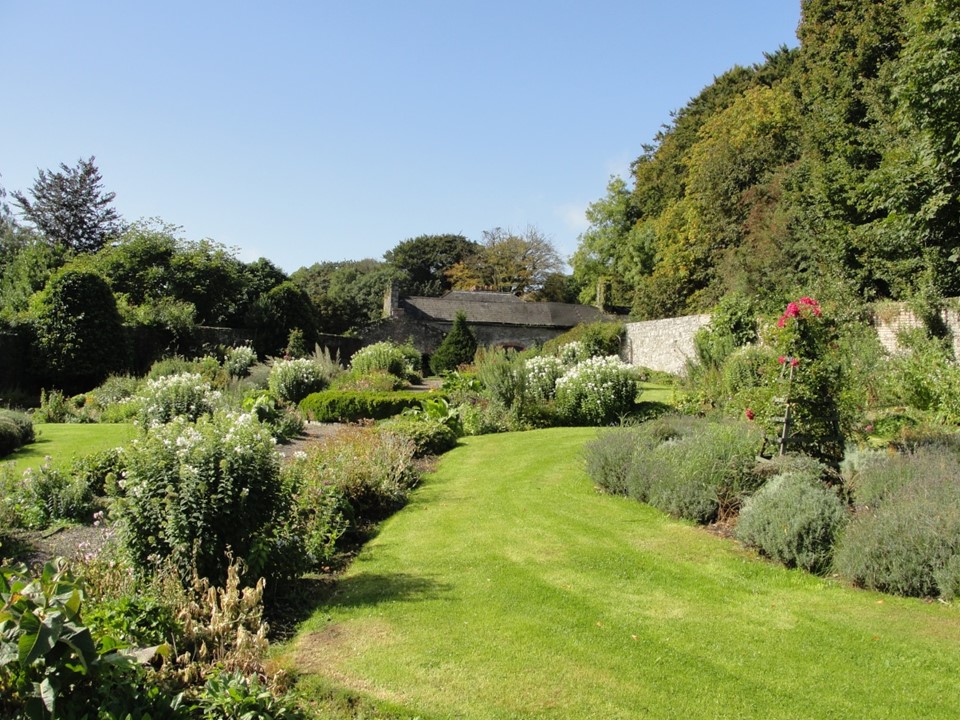
Bunratty Folk Park.  This living museum of 19th century Ireland is set on 26 acres. More than 30 homes, shops, and other buildings are recreated and furnished as they would have appeared given their purposes and social standing—from the poorest one-room fisherman’s hut, to a gypsy caravan, to a country cottage, to the proper Georgian residence (Bunratty House).

Village Street reinvents a collection of typical 19th century Irish buildings including a school, doctor’s house, grocery, hardware shop, post office, and a working licensed pub.


The Walled Garden.

Ardcroney Church.